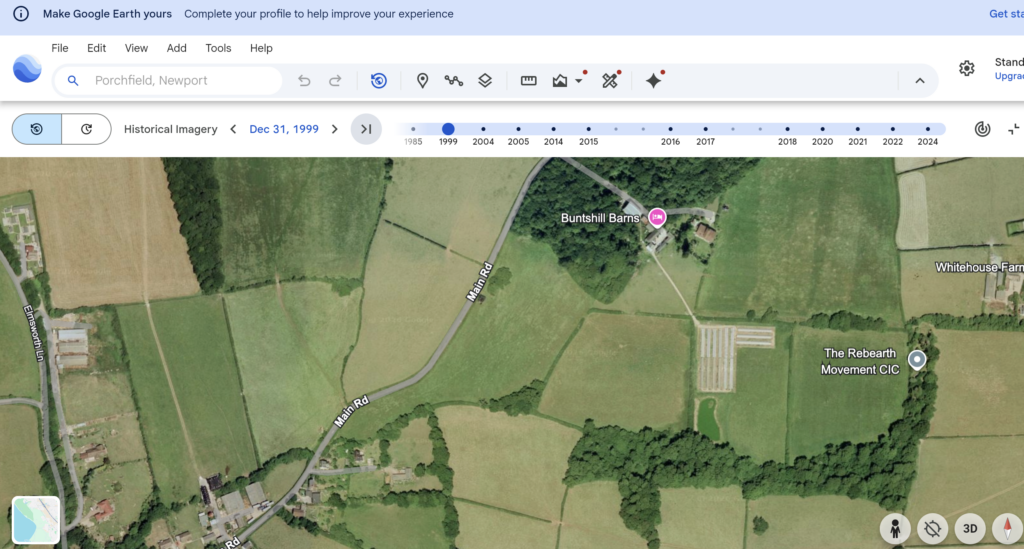
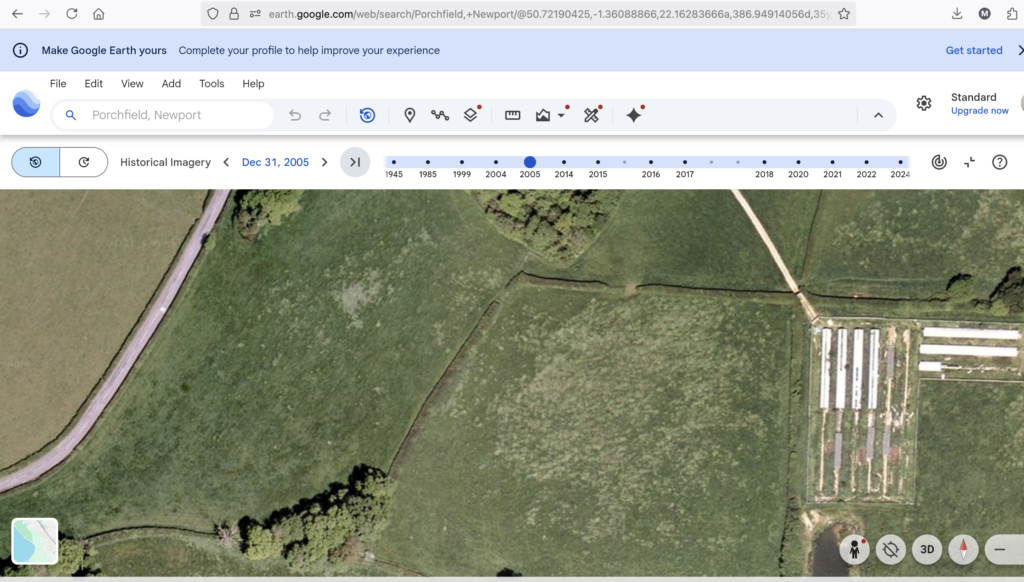
Bunt’s Hill Farm was run by Ken Shynn as a mixed farm, but in 1985 he was granted a licence to keep mink and he set up an intensive mink farm in the third field east from the road, comprising a hard driveway connecting the farm to the field, 12 N-S running covered sheds for the cages and three E-W running covered sheds. Each ‘shed’ has a concrete central aisle and rows of cages either side.
By 1999, there is a pond, which appears newly dug, south (downslope) from the cage area. This could have been a sediment/nutrient trap and was possibly mandated in the mid-1990’s by the newly formed Environment Agency.
The mink farm operated through to 2002 – the 2000 Fur Farming (prohibition) Act was not implemented until 1 January 2003. In 2003, the mink facilities were abandoned (four lines of cages were retained for chickens) and the pond stood largely undisturbed for the next 23 years. The 2004 aerial view shows the cages still intact, and greenery growing around the pond. By 2005 the cages were partly demolished.
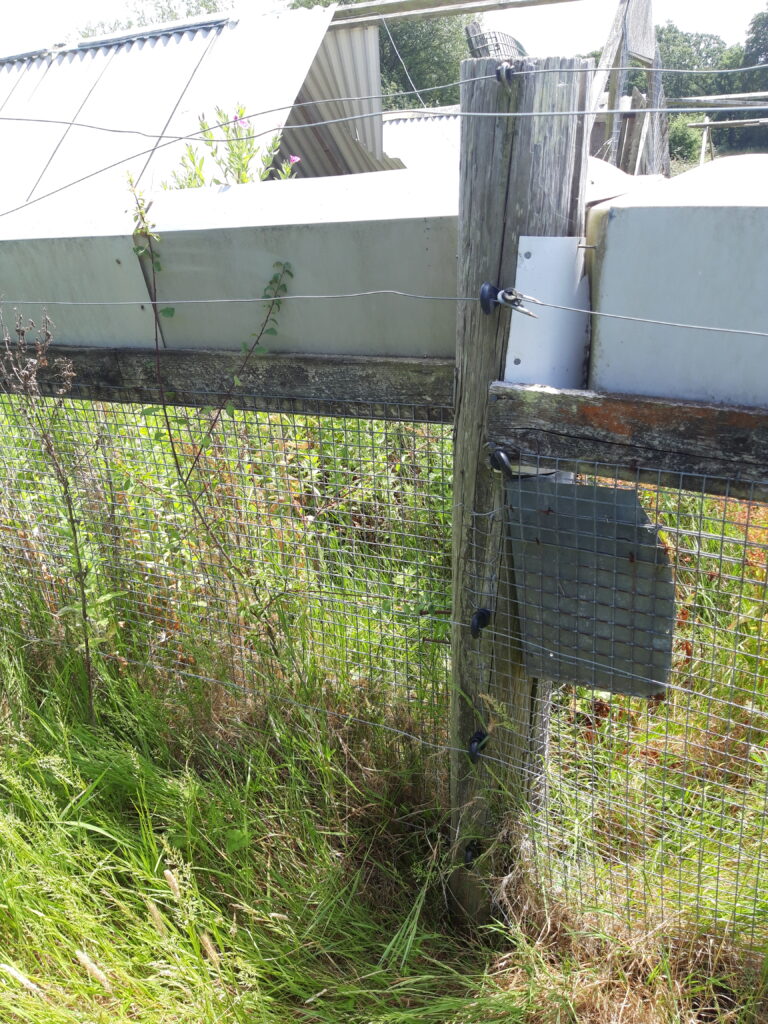
The security at the farm had to be substantial. Mink are superb climbers and can squeeze through very small holes in fences. The lines of defence included cages, sheds, and a perimeter fence with an anti-climb angled metal sheet running along the top to prevent climbing from the inside. Also the following photo shows the small size of mesh required in the bottom level of fencing.
The security did not end with keeping the mink in, the four strands of electric wire at 10cm 35cm 100cm and 140cm were thought to be to deter foxes and finally around the margins of the site field there is a stock fence with razor wire attached, presumably to deter activists who during this period were trying to force a ban by breaking into mink sites and releasing animals into the wild.
Our investigation of the pond site quickly led us to the razor wire that had been installed along the western and southern boundary to the mink farm. The stainless steel wire was as sharp and shiny as the day it was installed.
Having been abandoned in 2002, the mink farm has remained more or less undisturbed for the last 24 years. The question for us was how much of the original chemical residues were still lurking in the sediment at the bottom of the pond. Mink eat mainly a fish based diet which often contains significant levels of heavy metals, like cadmium and mercury; then the there are the chemicals used in cleaning the cages, often heavily dosed with copper compounds and medicines the mink were given, not to mention the treatment of skins and disposal of carcasses. The potential seems endless. Nonetheless we are committed to our ethos – first study in order to understand and only then devise an improvement plan. In the case of the pond, if there are contaminants in the silt, the optimum treatment could well be to do nothing. Disturbing the silt could well create more of a problem by mobilising contaminants. Currently we are making analyses of the water and sediment and will report the results when we have them.
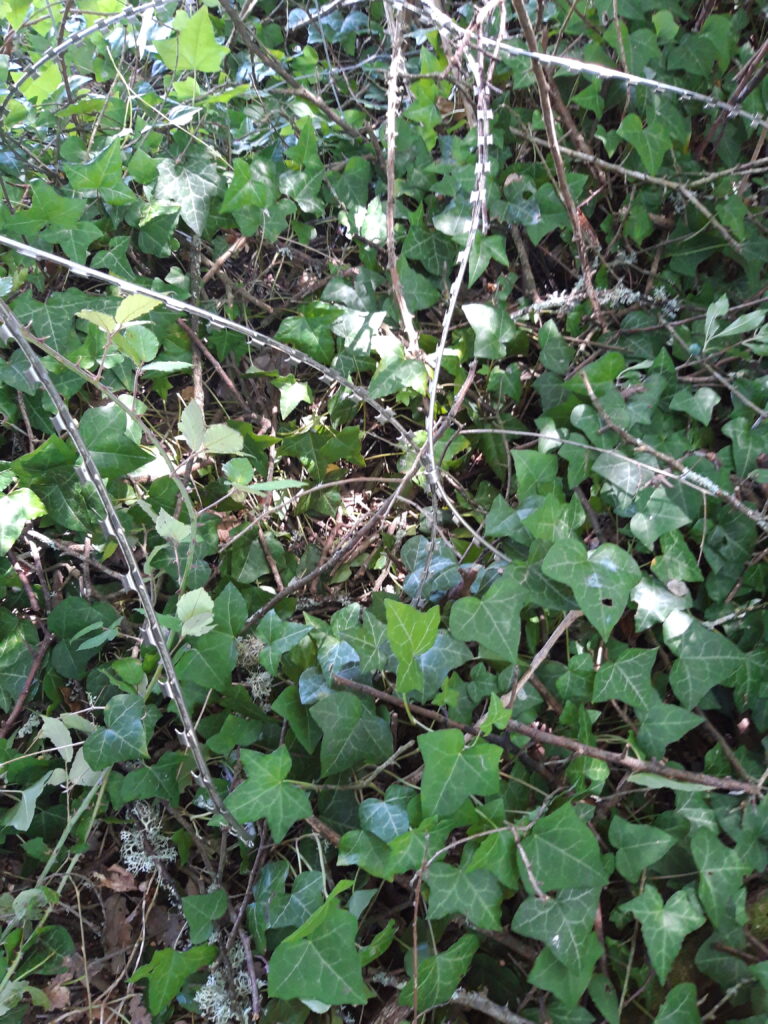
Razor wire mixed in with stock fencing and ground cover